

Avalanche Rescue
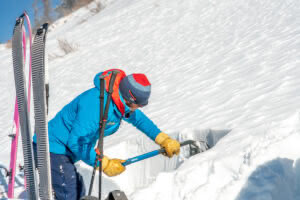
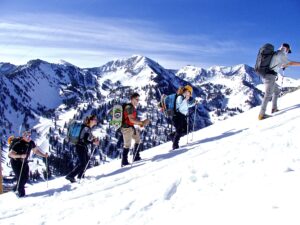
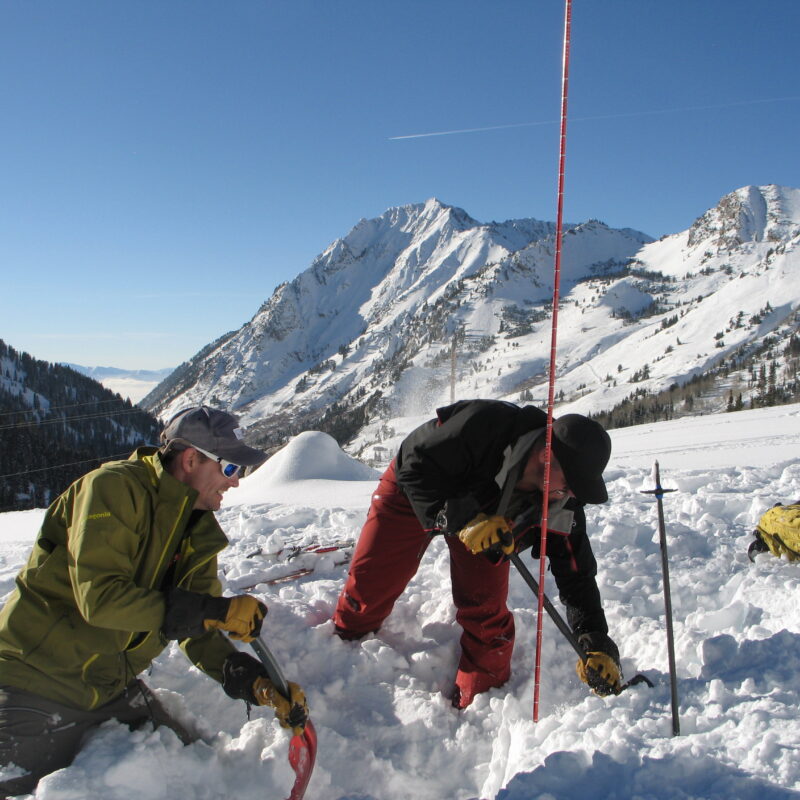
Companion rescue is a last resort, but an essential skill to master and stay current on as a backcountry partner. This full-day, field-based Avalanche Rescue course focuses on the fundamentals of efficient rescue. Instructors will demonstrate, then students will practice, all aspects of organizing and leading rescues, including transceiver searches, methodical probing, strategic shoveling and airbag deployment and re-packing.
Course Dates
- Dec 6, 2026 (Sunday)
- Dec 19, 2026 (Saturday)
- Dec 26, 2026 (Saturday)
- Jan 10, 2027 (Sunday)
- Jan 22, 2027 (Friday)
- Feb 20, 2027 (Saturday)
What Our Guests and Students Say
Avalanche rescue, like so many other skills, requires repetition to be good at it. In the event an avalanche has occurred, you typically have less than 15 minutes before serious injury is sustained by the victim. Although the goal is to never be in this situation, if you ever are, it’s your duty to know how to use your gear and use it well. Additionally, best practices in the industry are regularly researched and updated. In turn, any updated rescue techniques will be passed along to you as research and equipment evolve.
This avalanche rescue course is also an A3 Pro Level 1 and Rec Level 2 prerequisite. It also pairs well with the Level 1 Refresher course. Students may travel on skis or splitboard with skins, or on snowshoes. Each person who completes the training will receive their Avalanche Rescue card accredited by the American Avalanche Association (A3).
UMA’s Avalanche Rescue Course Curriculum
- Anticipating a rescue: terrain recognition and travel protocols
- Escape and survival strategies for avalanche victims
- Rescuer safety, last seen point, communication and common mistakes
- Transceivers: antennae, range variations, idiosyncrasies
- Beacon checks, trailhead and full-range, send and receive
- Single-beacon searches, including deep burials
- Multiple burials; flagging functions with various beacons
- Basic patient care for avalanche victims, packaging and transport
- Small and large team rescues: response roles, tactics and scenarios
- Non-transceiver searches: spot probing; probe lines
- Gear to carry and recommended training for backcountry travel
- Emergency response procedures and interfacing with EMS teams
Max Student : Instructor Ratio
6 : 1
Who should take this course?
Those who want a refresher throughout their many years in the backcountry. Plus, it’s a great way to stay up-to-date on the latest industry standards. It’s also meant for those who are new to the backcountry and plan to take an avalanche awareness course (or the equivalent) in addition to rescue.
Course Prerequisites
- No avalanche or backcountry training is required.
- Avalanche Fundamentals or Avalanche Level 1 is recommended.
Fitness & Skill Level
- This course is for beginners to advanced backcountry athletes.
- The ability to hike 500′-1000′ vertical in 1- 2 hours is required.
NOTE: There are two main parts to avalanche training. Learning how to avoid avalanches and, in the event you or your partner(s) are caught in an avalanche, how to respond effectively and efficiently (rescue). Therefore, this course is best taken once you already know how to avoid avalanches and identify avalanche terrain in the first place.
This is a full-day course that includes spending 8 hours in the field. Guests are expected to bring their own snacks, lunch and water (1-2 liters). UMA does not provide transportation. We encourage carpooling to help mitigate traffic in the canyons and crowded parking areas.
SCHEDULE & MEETING LOCATION
This course typically starts around 8 am. Exact meeting time and location are provided to registered guests before the course date. All UMA Field Sessions take place in either Little Cottonwood Canyon or Big Cottonwood Canyon in the Central Wasatch Mountains in Salt Lake City, Utah.
GUIDE/INSTRUCTOR
You will receive a reminder with the contact information for your guide/instructor. They will contact you directly by email to confirm meeting time and location, as well as weather considerations and equipment needs.
TRANSPORTATION & PARKING
Transportation will not be provided. Most canyon parking lots require a parking fee.
How To Register
- Register Online
- Call us at (801) 550-3986
- Email us at uma@utahmountainadventures.com
UMA reserves the right to cancel or shorten the course if fewer than 2 participants register.
Avalanche Rescue COURSE EQUIPMENT LIST
- Non-cotton top and bottom base layer
- Puffy overcoat and/or other insulation layer (synthetic or down)
- Waterproof/windproof outer shell jacket and pants (or bibs)
- Waterproof snow gloves and mittens (or a second pair of gloves)
- Lightweight gloves for uphill travel
- Warm hat and baseball cap
- Helmet (recommended)
- Sunglasses and goggles
- Sunscreen
- 1-2 liters of water (water bladders not recommended for winter use)
- Thermos of hot drink (optional)
- Sack lunch and snacks
- Alpine touring, telemark or snowboard boots
- Alpine touring, telemark skis or splitboard
- Ski poles with powder baskets
- Climbing skins
- Slope meter, snow saw and snowpit kit (optional)
- Beacon
- Shovel
- Probe
- Backpack (25-40 liters)
Please see our Backcountry & Avalanche Gear List & Rentals page for information on the items UMA provides and local shops where you can rent or purchase gear.
Recommended Books
Snow Sense: A Guide to Evaluating Snow Avalanche Hazard by Jill Freestone & Doug Fesler
Avalanche Essentials: A Step-by-Step System for Safety and Survival by Bruce Tremper
Staying Alive in Avalanche Terrain by Bruce Tremper
Recommended Maps
Wasatch Touring Map 1 by Alpentech
Wasatch Touring Map 2 by Alpentech
Wasatch Backcountry Skiing Map by Steve Achelis
UMA is a proud provider and member of the American Avalanche Association (A3). UMA teaches its own proprietary curriculum recognized by A3 which oversees recreation and professional avalanche curricula in the US. There are no major differences between UMA and AIARE curricula and students can expect successful outcomes for both courses. A3 was the first body to govern avalanche education in the US, and remains at the core of innovation and oversight. UMA president, Julie Faure, sits on the A3 advisory board for avalanche education curriculum development. Graduates of UMA Avalanche Rescue courses will receive a UMA/A3 Certificate of Completion.

Please see our main FAQ page for general questions or for anything not covered below.
What can I expect in the backcountry? How is it different from resort skiing?
Backcountry terrain offers challenges and major rewards that are not found in the resorts. In the backcountry, unlike the resort, runs are not designed by man to ease the downhill experience by creating trails, removing obstacles and maintaining a more consistent snow pack. Different aspects and elevations hold different snow; in one area you can have soft powder and in another it may be zipper crust or hard pack. This is what we call variable conditions.
Our goal is for participants to get the most out of their days/experience with UMA and knowing your ski/riding ability and fitness level is a big part of serving you appropriately. We do our best to match you with other similar levels in groups so that each person can start at the unique level they’re at and progress from there in the appropriate group.
Which course is best for me?
If you have never used an alpine touring ski or splitboard setup but are a confident skier/rider in the resort, we recommend Intro to Backcountry to gain familiarity with backcountry equipment, uphill travel on skins, uphill kick turns, transitions and downhill riding in deeper, variable snow conditions.
If you would like to combine learning how to travel in the backcountry with avalanche awareness, UMA’s 2-Day Backcountry Touring & Avalanche Skills Course is a great option.
If you have some experience using an alpine touring ski or splitboard setup with skins and are a confident skier/rider but are unfamiliar with basic avalanche concepts, we recommend Avalanche Fundamentals.
Avalanche Level 1 is designed for those who are confident skiers/riders, know how to use an alpine touring ski or splitboard setup, are familiar with basic avalanche concepts and have been touring in the backcountry for a season or two.
Avalanche Rescue Skills is recommended for those who are familiar with basic avalanche concepts through courses or personal learning. Typically taken after Avalanche Level 1.
If you have taken Level 1, but are rusty on the material, Avalanche Level 1 Refresher is a great review.